
Key Takeaways
- Tim Scott requires unanimous Republican backing from all 13 committee members before proceeding with CLARITY Act markup
- John Kennedy continues to resist support, influenced by frustrations surrounding a delayed housing measure
- Thom Tillis advocates for mid-May proceedings while insisting on mandatory ethics provisions
- Outstanding concerns encompass stablecoin incentive structures, DeFi regulatory frameworks, and presidential cryptocurrency investments
- Industry analysts estimate passage probability between 15–25% for the current legislative session
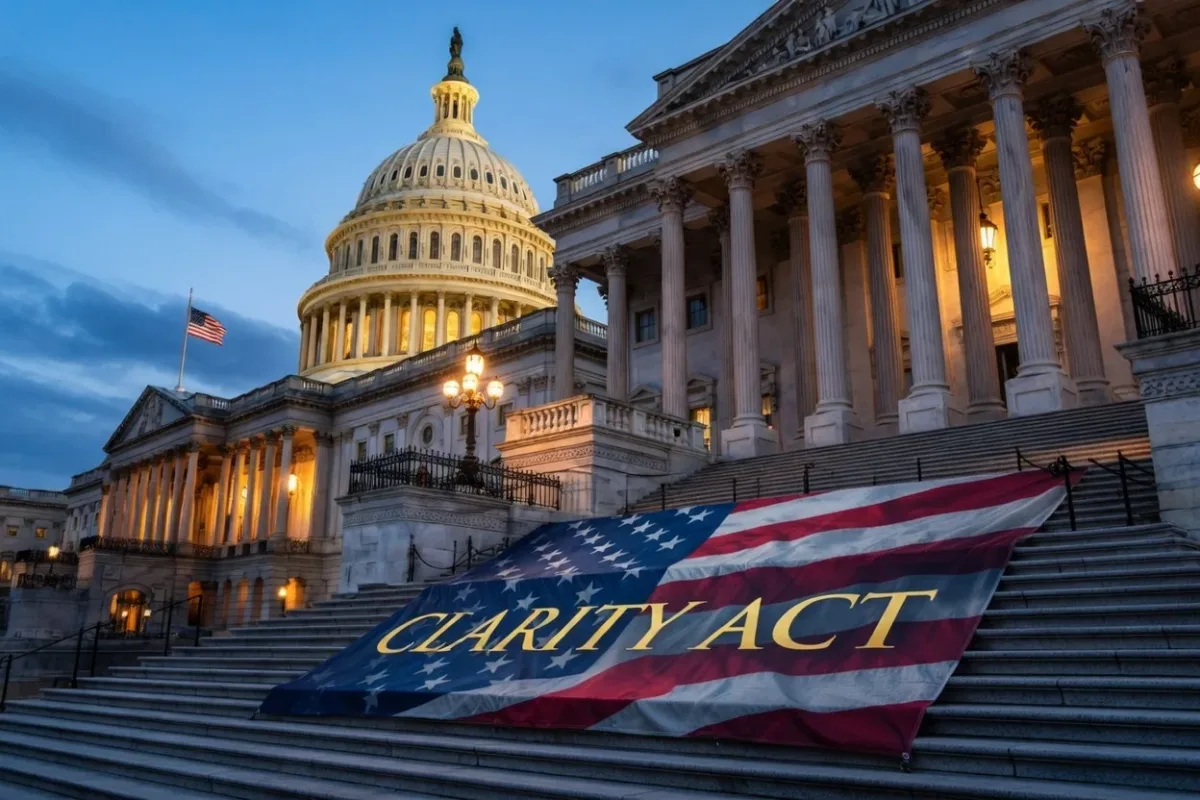
The CLARITY Act, comprehensive legislation designed to establish cryptocurrency market regulations, approaches a potential Senate committee hearing in May. However, resistance from multiple Republican senators and lingering policy disagreements continue to delay advancement.
🔥BULLISH: 🇺🇸Senator Tom Tillis says the CLARITY Act is in the red zone and could head to committee markup in May, with a possible Senate floor move by June or July. pic.twitter.com/zfkqxNGFse
— Coin Bureau (@coinbureau) April 30, 2026
Tim Scott, leading the Senate Banking Committee, has established a requirement for complete Republican consensus among his thirteen committee members before advancing the measure. While acknowledging that Thom Tillis and several colleagues have joined the effort, universal backing remains elusive.
During a Fox Business interview, Scott characterized lawmakers as being in the “red zone” toward finalizing an agreement. His strategy involves conducting a bipartisan committee markup during May, with floor proceedings targeted for June or July.
Tillis, serving as a principal Republican negotiator, requested Scott arrange markup proceedings and indicated readiness to provide revised legislative text several days beforehand. However, Tillis established a non-negotiable position: he will vote against the measure if it advances from the Senate chamber lacking ethics-related provisions.
John Kennedy ranks among senators continuing to withhold endorsement. Reporting from Punchbowl News indicates Kennedy’s hesitation connects partially to dissatisfaction with both House leadership and White House handling of a delayed Senate housing measure — extending beyond the cryptocurrency proposal alone.
Ethics Requirements and Presidential Investment Portfolio Create Additional Obstacles
Democratic senators have positioned ethics safeguards as a fundamental requirement. Angela Alsobrooks stated that achieving bipartisan committee approval requires first addressing illicit finance prevention and ethics frameworks.
Chair Scott maintains that ethics provisions fall outside his committee’s jurisdictional authority. This position leaves the matter unresolved and potentially requiring intervention from other congressional bodies before reaching the full Senate chamber.
Presidential cryptocurrency activities have amplified scrutiny surrounding the legislation. Bloomberg analysis calculated presidential earnings exceeding $1.4 billion from digital asset ventures, including participation in the DeFi and stablecoin initiative World Liberty Financial. The presidential family additionally maintains a 20% ownership position in mining operation American Bitcoin.
The previous weekend saw a Mar-a-Lago gala hosted for TRUMP memecoin holders, generating criticism from Democratic congressional members.
The House chamber approved its parallel legislation version, titled Clarity, incorporating language prohibiting congressional members and senior executive officials from issuing digital commodities during their tenure. This provision represents a non-negotiable objection for White House officials.
Stablecoin Incentive Structures and DeFi Frameworks Remain Contested
Beyond ethics considerations, the legislation has encountered obstacles regarding stablecoin reward mechanisms. Public disputes between a senior White House cryptocurrency advisor and banking institutions have unfolded in open forums.
DeFi regulatory language faces heightened examination. Legislators alongside law enforcement organizations express concern that certain developer liability protections could impede financial crime prosecution efforts.
Chuck Grassley, chairing the Senate Judiciary Committee, maintains ongoing discussions with Cynthia Lummis to resolve law enforcement apprehensions.
The measure confronts a strict timeline constraint. Senate proceedings pause for a five-week August recess preceding midterm elections. Failure to complete committee proceedings and reach floor consideration before this period significantly diminishes advancement prospects.
A cryptocurrency industry analyst projected passage likelihood for the current year at 15% to 25%. Research organization Galaxy assessed probability somewhat more optimistically, estimating approximately 50%.



