
TLDR
- Gold futures plummeted 7% Monday, erasing entire 2026 rally
- Spot gold descended to approximately $4,288/oz — marking the steepest weekly decline since 1983
- President Trump issued a 48-hour ultimatum to Iran regarding the Strait of Hormuz
- Surging crude oil prices from regional turmoil are amplifying inflation concerns and diminishing expectations for monetary easing
- Silver and platinum experienced significant declines; ECB and Bank of England indicated potential tightening ahead
Precious metals markets experienced severe turbulence this week, with gold suffering a dramatic decline as escalating tensions between the United States, Israel, and Iran drive crude oil prices higher and intensify worries about persistent inflation.
Spot gold descended to approximately $4,288 per ounce during Monday’s session. The yellow metal shed more than 10% throughout the previous week — representing the most severe weekly decline since 1983.
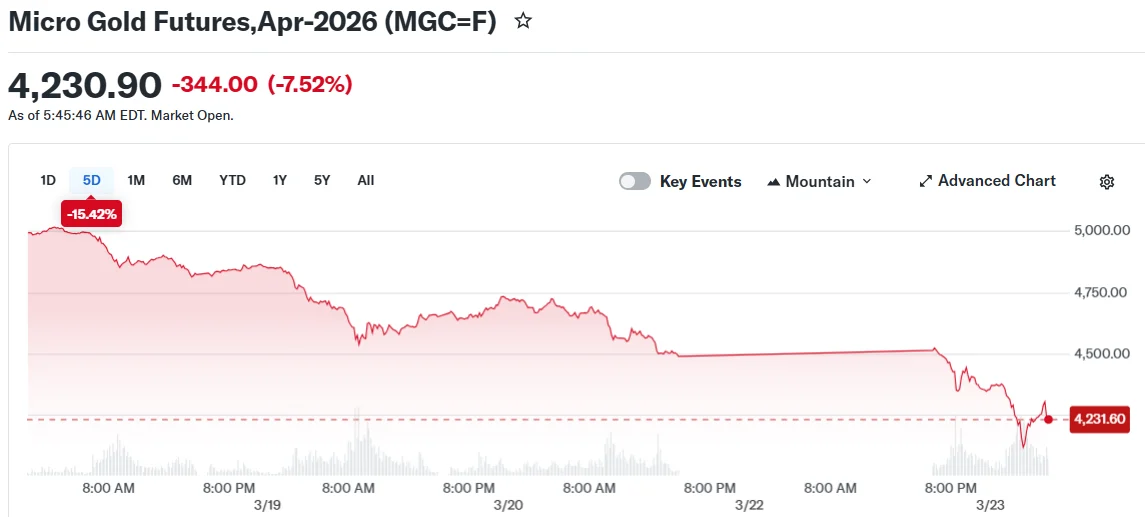
Gold futures contracted roughly 7% during morning trading hours on Monday. These losses have completely eliminated the metal’s year-to-date performance gains for 2026.
Gold began the year riding considerable upward momentum. The precious metal delivered an extraordinary 65% surge throughout 2025. However, military operations in the Middle East have rapidly transformed market dynamics.
The primary catalyst behind the selloff centers on inflation dynamics. Escalating crude oil valuations, stemming from regional conflict, have sparked market concerns that monetary authorities will maintain elevated borrowing costs — or potentially implement additional tightening measures.
The Inflation-Gold Connection Explained
Gold generates no yield. When borrowing costs remain elevated or move higher, market participants typically gravitate toward income-producing assets. This dynamic diminishes gold’s relative appeal.
The US dollar has simultaneously gained strength, compounding downward pressure on gold valuations. An appreciating dollar increases the cost of gold for international purchasers operating in alternative currencies.
Greg Shearer, head of base and precious metals strategy at JPMorgan, described the drop as “an extremely brutal flush.” He said gold got caught up in a broad “sell everything” trade, not just targeted selling.
Both the European Central Bank and the Bank of England have communicated that rate increases may materialize this year. The Federal Reserve has stopped short of signaling hikes, though financial markets have systematically eliminated any anticipation of rate reductions in 2025.
OCBC analysts said the market is “trading less on geopolitical hedging flows and more on fears that stickier inflation could prompt a more hawkish central bank stance.”
Presidential Ultimatum Intensifies Regional Tensions
During the weekend, President Trump delivered a 48-hour deadline to Iran demanding the reopening of the Strait of Hormuz, warning of plans to “obliterate” vital energy facilities should Tehran decline.
🚨 “If Iran doesn’t FULLY OPEN, WITHOUT THREAT, the Strait of Hormuz, within 48 HOURS from this exact point in time, the United States of America will hit and obliterate their various POWER PLANTS, STARTING WITH THE BIGGEST ONE FIRST…” – President DONALD J. TRUMP pic.twitter.com/htLz1A0Mf7
— The White House (@WhiteHouse) March 22, 2026
Iran responded by issuing warnings to target energy and water installations throughout the Middle East while threatening complete closure of the strategic waterway.
The confrontation between Israel and Iran has now extended into its fourth week. Further escalation could propel oil valuations even higher, compounding inflation anxieties throughout global markets.
Despite heightened geopolitical uncertainty, gold has failed to attract traditional safe-haven demand. Inflation concerns have overwhelmed typical defensive positioning among traders.
Other precious metals experienced parallel declines. Silver contracted 2.7% to $65.90 per ounce. Platinum retreated 3.9% to $1,850 per ounce. Copper similarly registered steep losses.
ING commodities strategist Ewa Manthey observed that during periods of market stress, gold’s substantial liquidity can transform it into a funding source — prompting investors to liquidate positions to offset losses in other holdings.
JPMorgan analysts remain bullish on gold longer term. They wrote that if the energy disruption continues and growth is impacted, “the backdrop for gold will likely quickly flip materially bullish.”
Spot gold reached its weakest valuation since late December as of Monday morning trading.



