
Key Highlights
- Q4 2025 net profit reached NT$45.21 billion (~$1.41B), representing a 2% decline compared to the previous year and falling short of analyst projections of NT$60.88 billion
- Quarterly revenue climbed 22% year-over-year to NT$2.606 trillion, powered by surging AI server sales
- An elevated tax rate contributed to the earnings shortfall relative to Wall Street expectations
- Cloud infrastructure and AI server revenue represented 42% of total quarterly sales
- Management projects robust expansion for Q1 2026 and throughout the year, with ambitions to capture 40% of the AI server market
Foxconn delivered record-breaking quarterly revenue while profit figures came in below analyst expectations, primarily due to an increased tax burden. The Taiwan-based manufacturer maintains an optimistic outlook fueled by continued strength in AI infrastructure demand.
Foxconn Chairman Young Liu (World’s leading AI server manufacturer) from 4th quarter (Q4) conference (3/16)
-AI rack shipments in the Q1 will see strong double-digit growth over Q4 (QoQ).
-2026 AI rack shipments will double, with gains each quarter
-Holds 40% market share in AI…— Dan Nystedt (@dnystedt) March 16, 2026
The company reported quarterly net profit of NT$45.21 billion ($1.41 billion), representing a 2% year-over-year decrease. This figure fell significantly below the consensus estimate of NT$60.88 billion from FactSet and the NT$63.86 billion projection from LSEG.
Revenue performance painted a contrasting picture — climbing 22% compared to the prior year to reach NT$2.606 trillion. This marked an all-time high for quarterly sales at the electronics manufacturing giant.
The divergence between robust top-line growth and underwhelming profit stemmed primarily from tax obligations. An elevated tax rate during the quarter substantially reduced net income. Gross profit margin also experienced compression, declining to 5.88% from 6.15% in the year-ago period.
AI infrastructure has become a cornerstone of Foxconn’s business model. Cloud and networking products — including AI servers — generated 42% of total quarterly revenue. This represents an increase from the 41% share recorded in Q2, when this segment initially surpassed smart consumer electronics to become the company’s largest revenue contributor.
Foxconn manufactures server systems for Nvidia and handles iPhone assembly operations for Apple. The company’s Indian manufacturing facilities now produce the majority of iPhones distributed in the United States, while newly established plants in Mexico and Texas will focus on producing Nvidia AI server hardware.
Robust 2026 Projections
Chairman Young Liu emphasized during the earnings conference that AI infrastructure demand shows sustained momentum. “Artificial Intelligence’s strong growth was not just for this past year or two,” he stated. “It will last through the next two to three years.”
Liu noted that major clients anticipate the AI industry expanding to $1 trillion in valuation during this period. Foxconn aims to secure a 40% share of the AI server manufacturing market.
This marked the first occasion the company provided comprehensive annual revenue guidance for 2026. Both first-quarter and full-year projections carry a “strong growth” rating — the most optimistic designation Foxconn applies to its forecasts.
External Challenges Acknowledged
Liu identified geopolitical concerns during the call. “The biggest external challenge this year, in my view, is still the global political and economic situation, especially the war in the Middle East,” he stated.
The chairman provided no additional details on this matter. Supply chain vulnerabilities related to Middle Eastern conflicts have remained a persistent issue for international manufacturers.
Regarding consumer electronics, Foxconn anticipates robust year-over-year expansion in smart device sales. Liu indicated that memory component shortages and rising prices have had minimal impact on demand, largely because the company focuses on premium product categories.
The personal computer division faces different dynamics — Foxconn projects a year-over-year contraction in this segment during the first quarter.
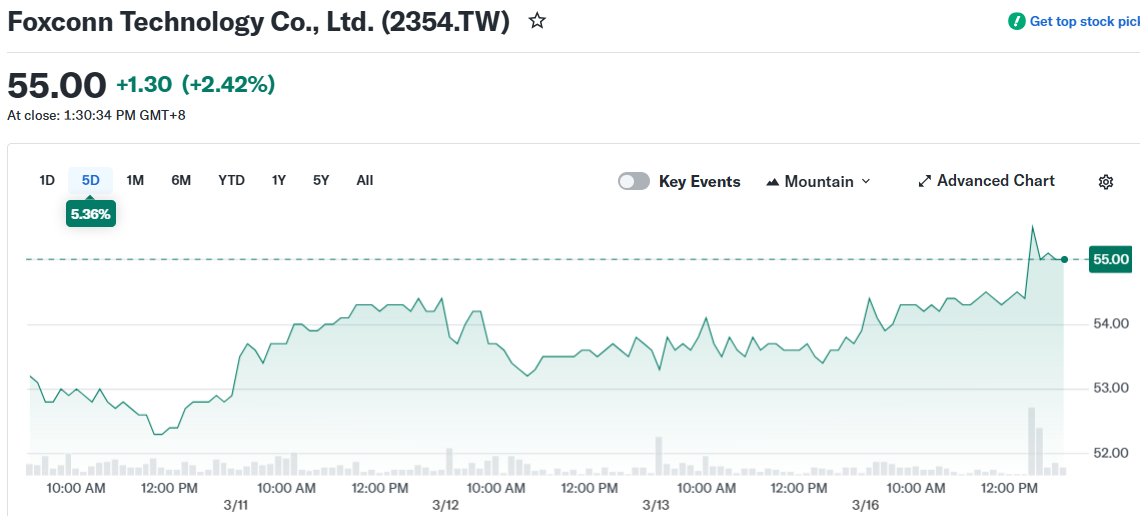
Shares of Foxconn have declined 6% year-to-date in 2026, trailing the 15% advance posted by Taiwan’s primary stock market index.



