
Key Takeaways
- Bank of America flagged potential Fed rate increases if ongoing Iran conflict pushes oil beyond the $80 threshold
- Rate hike probability climbed to 25% by December, marking a dramatic shift from nearly zero just five days earlier
- Fed Chair Powell indicated rate reductions would require measurable inflation improvements
- Bitcoin faces significant resistance maintaining levels above $70,000 amid mounting market headwinds
- Fed Governor Chris Waller, traditionally dovish on policy, supported maintaining current rates given escalating inflation threats
The Federal Reserve’s policy trajectory has entered uncertain territory. Markets that anticipated rate reductions just days ago now confront the genuine prospect of tightening for the first time in recent memory.
You can’t make this up:
The market now sees a 50% chance of a US Fed rate HIKE by the end of 2026.
Just months ago, markets saw as many as four rate CUTS this year.
As oil prices surge to $100+/barrel, inflation expectations are rapidly rising, with gas prices up nearly +50%…
— The Kobeissi Letter (@KobeissiLetter) March 20, 2026
This reversal stems from escalating U.S.-Iran tensions that erupted on February 28, driving crude prices upward and amplifying inflation concerns. Bank of America identified three catalysts that could prompt Fed tightening: resilient employment conditions, Jerome Powell’s extended tenure as Fed chair beyond current projections, and prolonged oil price elevation driven by Middle East conflict.
According to the bank’s analysis, risk intensifies when crude oil maintains trading levels above $80 per barrel. Recent weeks have seen prices hovering near that critical threshold.
Powell’s Recent Statements
During this week’s FOMC press conference, Fed Chair Jerome Powell made clear that rate reductions require demonstrable inflation deceleration. While avoiding definitive statements about upcoming hikes, he acknowledged such moves remain outside the consensus forecast among committee members.
Powell revealed he may continue serving until Kevin Warsh, his anticipated successor, completes Senate confirmation. This transition timeline remains uncertain. Should Powell still lead the committee at June’s FOMC meeting while Iran-related oil pressures persist, the momentum toward tightening could strengthen considerably.
Market expectations have undergone a remarkable transformation. Just five days prior, rate hike probabilities stood at essentially zero. Current CME FedWatch interest rate futures indicate approximately 25% odds of a December increase. This represents a substantial recalibration over a compressed timeframe.
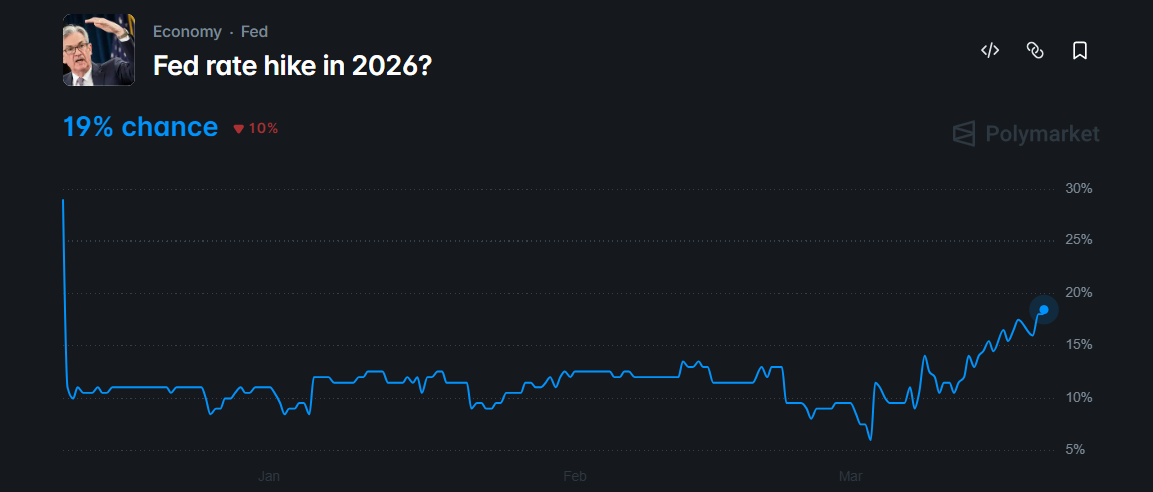
Polymarket data reveals a 35% probability that the Fed implements zero rate cuts throughout the year. Rate hike likelihood has climbed to 19%, doubling from the 8% level recorded when hostilities first commenced.
Cryptocurrency Market Response
Bitcoin faces mounting headwinds. The leading cryptocurrency has encountered difficulty sustaining positions above $70,000 as inflation anxieties intensify and rate cut expectations diminish. Total cryptocurrency market capitalization declined from an intraday peak of $2.4 trillion to $2.37 trillion during the same trading session.
Crypto assets experienced a temporary rebound before resuming downward movement alongside equities. Two-year Treasury yields surged to 3.89%, establishing the widest spread above the Fed’s policy rate witnessed in three years. Bond markets appear to be anticipating tighter monetary conditions ahead.
Polymarket participants now assign just 42% odds to a U.S.-Iran ceasefire, suggesting traders anticipate continued conflict.
Fed Governor Chris Waller, who previously advocated for rate reductions following disappointing February employment data, reversed his position this week. He cited mounting inflation risks connected to the Iran situation as justification for supporting steady rates. Waller emphasized the prudence of monitoring developments before committing to policy adjustments.



