
Key Highlights
- Delta Air Lines (DAL) shares advanced 2.1%, beginning Thursday’s session at $67.91
- Amazon partnership announced for Leo satellite connectivity installation across 500 aircraft beginning 2028
- TD Cowen adjusted price target to $76 from $77, Susquehanna lowered to $81 from $85; both maintain Buy ratings
- Analyst consensus holds at “Moderate Buy” with average price target of $78.84
- Executive and insider transactions totaled 620,550 shares valued at approximately $44.1M during the previous 90 days
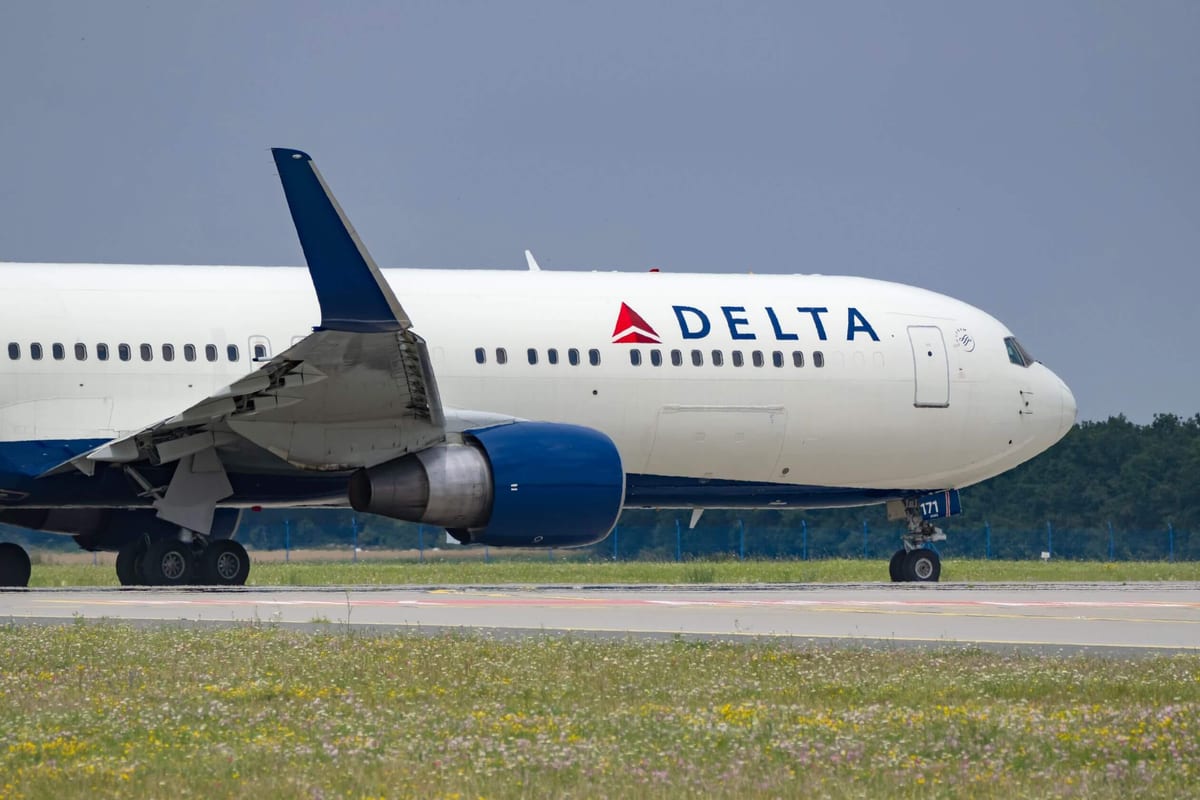
Shares of Delta Air Lines experienced a 2.1% gain Thursday morning, powered by a major satellite connectivity partnership with Amazon, even as several Wall Street firms made downward adjustments to their price targets.
TD Cowen revised its price objective on DAL to $76 from $77 while maintaining a Buy rating. This target suggests approximately 11.9% upside potential from Thursday’s opening price. Meanwhile, Susquehanna lowered its target to $81 from $85 while preserving a “positive” rating, indicating around 19% potential appreciation.
Multiple other firms made similar moves. Citigroup reduced its target to $77 from $87, Wells Fargo brought its objective down to $75 from $87, and Rothschild & Co Redburn decreased its target to $70 from $72. Among the optimistic adjustments, Jefferies increased its target to $78 from $72, while Goldman Sachs elevated its objective to $80 from $77, accompanied by a Buy rating.
Currently, 22 analysts assign a Buy rating to the airline stock, one analyst rates it Strong Buy, one maintains a Hold rating, and one carries a Sell rating. The consensus price target stands at $78.84.
Jet fuel cost projections continue to influence analyst models. Multiple firms have made modest downward revisions to fair-value calculations as elevated fuel price assumptions enter their forecasts. One valuation model adjusted from approximately $80.57 to $79.89 — a minor shift that underscores the stock’s sensitivity to energy costs.
Amazon Partnership
The most significant positive development this week came from Delta’s announcement of a partnership with Amazon to deploy Leo satellite connectivity technology across an initial fleet of 500 aircraft, with implementation scheduled to commence in 2028. This enhancement aims to deliver superior in-flight Wi-Fi performance, boost passenger satisfaction metrics, and potentially create additional revenue opportunities.
Wall Street sentiment toward DAL has remained generally positive despite broader economic challenges, with market observers noting that investor confidence in the stock has persisted even amid ongoing fuel cost concerns.
Insider Selling
Executive transaction data reveals a different narrative. During the past 90 days, company insiders divested 620,550 shares valued at roughly $44.1 million. CEO Edward Bastian sold 100,000 shares in February at an average price of $70.26, decreasing his holdings by 6.83%. He had previously sold 173,230 shares in January at $71.00. EVP Alain Bellemare divested 35,212 shares at $75.20, trimming his position by 20.31%. EVP Steven Sear sold 38,600 shares at $75.05, representing a 26.99% reduction.
Institutional investors maintain significant ownership at 69.93%. Wellington Management expanded its stake by 137.4% in Q4, acquiring approximately 7.99 million shares. Pacer Advisors increased its position by 1,579.2%, while AQR Capital boosted its holdings by 44.3%.
Delta’s most recent quarterly results showed EPS of $1.55, slightly surpassing the $1.53 consensus estimate, while revenue of $14.61 billion fell short of the $15.80 billion projection. The airline has issued Q1 2026 EPS guidance ranging from $0.50 to $0.90 and full-year guidance between $6.50 and $7.50.
Analysts highlighting near-term earnings risks suggest Delta could encounter headwinds from revenue composition challenges and elevated fuel expenses before its upcoming earnings release.



