
TLDR
- Bitcoin maintains support above $66,000, experiencing a 6% weekly decline that outperforms most traditional assets
- Gold continues its nine-day losing streak, shedding approximately 18% from peak levels
- Wall Street equity futures declined Monday morning, marking the Dow’s most prolonged downturn since 2023
- President Trump delivered a 48-hour deadline to Iran regarding the Strait of Hormuz situation, warning of potential energy infrastructure strikes
- Goldman Sachs elevated oil price projections, characterizing the Hormuz situation as an unprecedented crude supply disruption
Bitcoin demonstrates relative strength compared to traditional assets during the fourth consecutive week of global market declines, influenced by the continuing US-Israeli conflict with Iran.
During Monday’s Asian trading hours, Bitcoin traded at $68,316, gaining 1.5% over 24 hours while posting a 6% weekly decline. Ether climbed 2.7% to $2,059. Among major cryptocurrencies, Dogecoin registered the weakest performance, falling 7.4% weekly to $0.09.
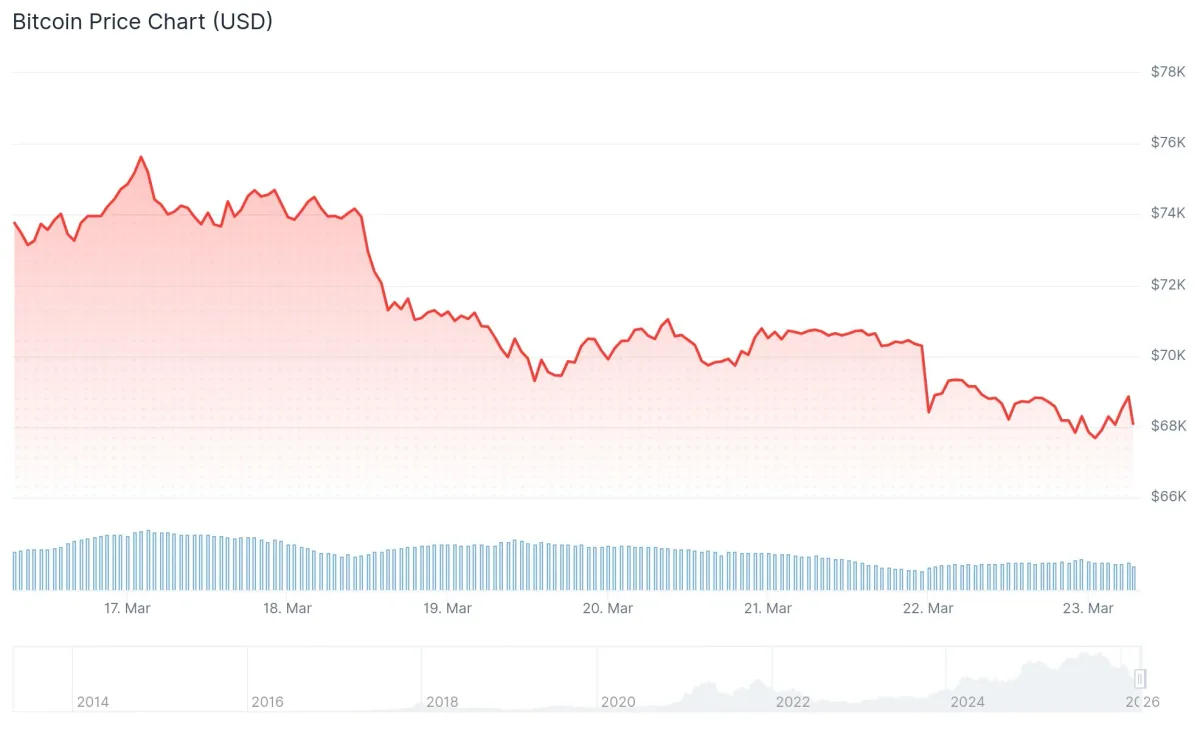
Tron emerged as the sole major cryptocurrency posting weekly gains, advancing 3.8%.
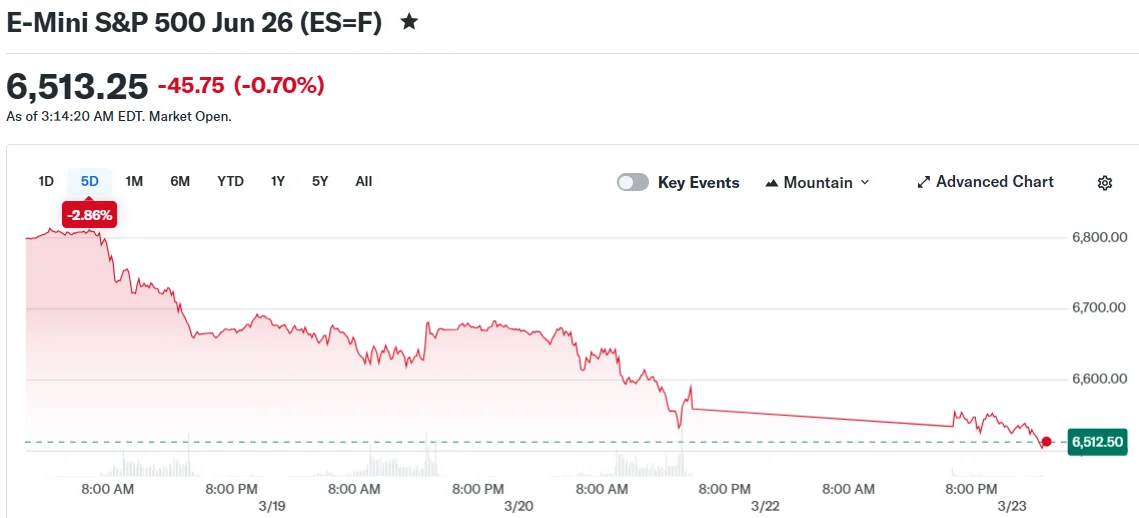
US equity futures opened lower Monday morning. Dow futures decreased approximately 0.4%, S&P 500 futures dropped 0.5%, and Nasdaq 100 futures declined 0.6%.
During the week concluding Friday, both the Dow and Nasdaq registered losses near 2%, while the S&P 500 shed 1.5%. The Dow has accumulated four consecutive weeks of negative performance, representing its most extended decline since 2023.
Gold experienced its ninth straight session of losses Monday, declining to approximately $4,360. This represents an 18% retreat from recent peaks, defying its conventional status as a safe-haven during times of geopolitical uncertainty.
Alexander Blume, CEO of Two Prime, an SEC-registered investment advisor, characterized the movements in gold and Bitcoin as “more structural than market-based.” He highlighted China and other nations systematically accumulating gold to diminish reliance on the US dollar, a pattern that shifted as the conflict intensified and liquidity became paramount.
What’s Driving the Sell-Off
The Iranian conflict has now entered its fourth week. President Trump announced over the weekend his opposition to a ceasefire and delivered a 48-hour deadline Saturday, threatening military action against Iranian energy facilities if the Strait of Hormuz remains closed.
IMPORTANT UPDATE:
Trump gave Iran a 48 hour deadline to open the Strait of Hormuz or he will bomb their power plants
Iran responded they are open to opening the Straits, but want an end to the war and assurances there won't be more wars
I think we have the foundation for an… pic.twitter.com/KrJW8L2MUL
— Mario Nawfal (@MarioNawfal) March 22, 2026
Iran countered by declaring that any such military action would trigger permanent closure of the Strait along with retaliatory operations targeting US and Israeli energy installations throughout the region.
Brent crude increased slightly to approximately $113 per barrel, accumulating gains exceeding 70% year-to-date. Goldman Sachs elevated its full-year Brent projection to $85 from $77 and adjusted its WTI outlook to $79 from $72. The financial institution labeled the Hormuz disruption as the most significant supply shock ever recorded for global crude markets.
Bond yields climbed as extended conflict heightened inflation worries, diminishing prospects for central bank interest rate reductions.
Market Outlook
Asian equity markets declined for three consecutive sessions and are nearing correction territory. European and S&P futures indicated additional losses ahead.
Friday will deliver updated figures for the University of Michigan consumer sentiment index, accompanied by short and long-term inflation expectation data. The S&P Global Flash US PMI report arrives Tuesday.
Blume revealed Two Prime maintains positioning for elevated funding and futures rates in upcoming weeks, indicating his expectation of greater Bitcoin upside than current market pricing reflects.
Trump’s 48-hour deadline reaches expiration Monday evening.



