


TLDR
- President Trump described Iran’s ceasefire as hanging by a thread after dismissing Tehran’s peace proposal as unacceptable
- Brent crude prices reached approximately $105 per barrel, while West Texas Intermediate approached $99
- Tehran’s conditions included ending the US naval blockade, sanctions relief, and maintaining partial authority over Strait of Hormuz operations
- Saudi Aramco’s chief executive stated global markets face a weekly shortfall of 100 million barrels while the strait remains restricted
- Market participants are monitoring US inflation reports and the upcoming Trump-Xi Jinping summit for direction
President Trump dismissed Iran’s most recent peace proposal on Monday, describing it as unacceptable and using harsh language to characterize the offer. He informed reporters the ceasefire remained on significant life support, intensifying concerns the ten-week conflict could reignite.
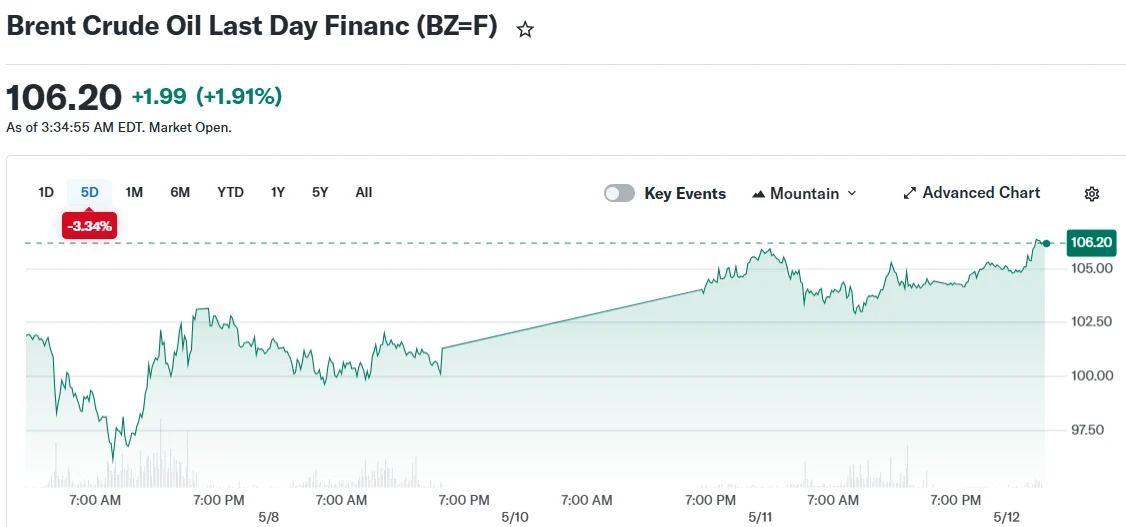
Brent crude reached approximately $105 per barrel on Tuesday, extending gains of nearly 3% from the previous trading session. West Texas Intermediate advanced to roughly $99 per barrel.
The conflict commenced approximately ten weeks ago, with a fragile ceasefire established in early April. Ongoing attacks targeting vessels in the area have sustained elevated tensions.
Tehran’s response to Washington’s peace framework included several demands. The list encompassed ending the American naval blockade, granting sanctions relief, allowing Iranian oil exports to resume, compensation for war damages, and maintaining partial oversight of shipping traffic through the Strait of Hormuz.
The Strait of Hormuz serves as a critical chokepoint for global energy transport. Roughly one-fifth of worldwide oil and petroleum products transit through this waterway.
Impact of Strait Restrictions on Global Oil Availability
Amin Nasser, chief executive of Saudi Aramco, indicated global markets face a deficit of 100 million barrels of oil supply during each week the strait remains closed to regular traffic. Aramco has redirected certain export volumes through its western terminal, yet prices remain elevated and purchasing nations, particularly China, have reduced their intake volumes.
American gasoline prices have surged, creating political pressure on Trump and Republicans approaching November’s midterm elections. Washington has authorized strategic petroleum reserve releases to moderate price increases.
Analysts at Bloomberg Economics assessed that a comprehensive peace agreement appears distant. They projected hostilities could resume at reduced intensity, characterizing this scenario as the emerging standard.
Axios sources reported Trump is convening his national security advisors to evaluate potential military action resumption. The president mentioned to Fox News he is reconsidering a proposal to provide naval escorts for commercial vessels traversing the strait.
Key Factors for Market Participants
Financial markets are closely monitoring Tuesday’s US Consumer Price Index release. Economic forecasters anticipated the headline inflation metric would climb to 3.7% from 3.3% year-over-year, partially attributed to elevated energy expenses stemming from the regional conflict.
Producer price data scheduled for Wednesday release is likewise anticipated to reflect increasing cost pressures from higher gasoline and transportation expenses.
Rising inflation could challenge Federal Reserve policy deliberations and sustain elevated interest rate levels for an extended period.
Market observers are focused on Trump’s scheduled summit with Chinese President Xi Jinping in Beijing. The bilateral discussions are anticipated to address Iran, commercial relations, and energy security concerns. China purchases more Iranian oil than any other nation and maintains diplomatic channels with Tehran.
The US Treasury Department imposed additional sanctions Monday targeting entities facilitating Iranian oil sales to China. Market analysts suggested the Trump-Xi meeting outcome could significantly influence the conflict’s trajectory.
Market momentum indicators have weakened in recent trading periods as certain refineries have reduced purchasing activity.
