



Key Highlights
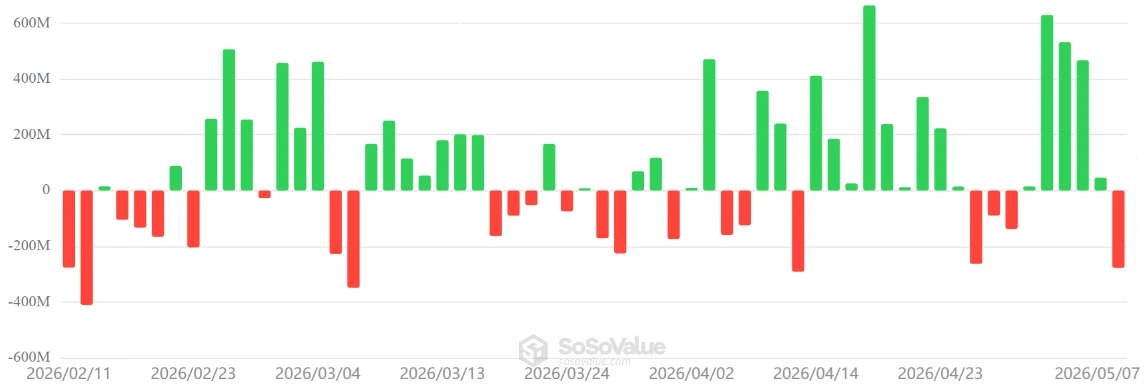
- U.S. spot Bitcoin ETFs recorded $277 million in net withdrawals on May 7, breaking a consecutive five-day accumulation period
- BlackRock’s IBIT experienced $98 million in outflows within 24 hours; Fidelity’s FBTC marked consecutive withdrawal days
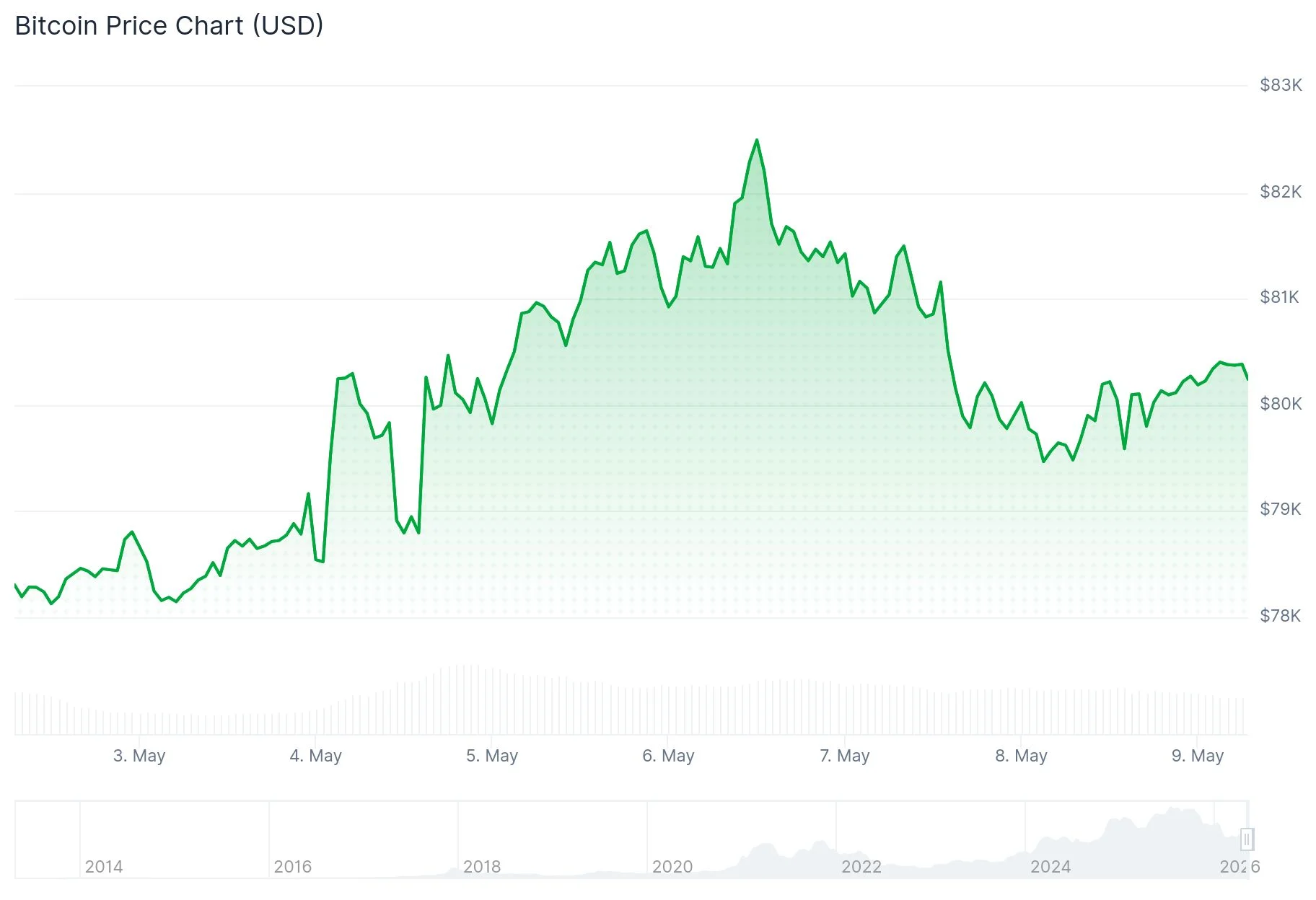
- Bitcoin retreated to levels below $80,000 following resistance encountered at the $82,000–$82,500 range
- Coinbase saw revenue decline by 31% while Robinhood’s crypto segment dropped 47% year-over-year, signaling diminished retail participation
- Dollar weakness and speculation surrounding a possible Strategic Bitcoin Reserve maintain longer-term optimistic outlook
The five-day accumulation pattern for U.S. spot Bitcoin ETFs came to an abrupt halt on May 7, with products recording $277.5 million in net withdrawals. This reversal followed a period that brought more than $1.6 billion in fresh capital since May began.
BlackRock’s iShares Bitcoin Trust (IBIT) experienced a single-day exodus of $98 million. This withdrawal occurred despite the fund accumulating over $1 billion in BTC during the preceding five trading sessions. IBIT maintains approximately $75.8 billion in total assets under management.
Fidelity’s Wise Origin Bitcoin Fund (FBTC) marked its consecutive second day of capital flight, with combined two-day withdrawals reaching $167.94 million. The fund currently manages $15.24 billion in total assets.
Collectively, U.S. spot BTC ETF products manage approximately $106.77 billion in Bitcoin holdings.
Bitcoin traded within the $79,700–$80,180 range on Friday, following earlier rejection at resistance levels between $82,000 and $82,500 during the week. Leveraged long positions totaling around $270 million faced liquidation within a 24-hour window.
Weakening Retail Participation Signals
Financial results from leading cryptocurrency platforms revealed contracting retail engagement. Coinbase’s revenue showed a 31% contraction versus Q1 2025 figures. Robinhood’s cryptocurrency-related income experienced a 47% decrease during the comparable timeframe.
Jake Kennis, senior research analyst at Nansen, observed that Bitcoin’s advance beyond $81,000 stemmed primarily from institutional spot purchases and short position liquidations — retail traders remained largely absent. Funding rates demonstrated unusual restraint throughout the price movement.
Lacie Zhang, research analyst at Bitget Wallet, indicated that absent renewed retail interest, corrections toward the $75,000–$78,000 support zone could materialize.
Leading traders on Binance reduced Bitcoin long exposure to the lowest concentration in more than four weeks. At OKX, the long-to-short ratio among premier traders declined to 0.27, compared with 1.20 merely ten days prior.
Broader Economic Context: Employment Figures and Currency Movements
April’s U.S. nonfarm payrolls registered 115,000 new positions — approaching double the anticipated 62,000. March figures received upward revision to 185,000. The unemployment rate remained steady at 4.3%.
Robust employment statistics bolstered short-term risk appetite, though Federal Reserve rate reduction capacity remains constrained by ongoing energy-linked inflationary pressures.
The US dollar has depreciated against primary global currencies throughout the past two months. Market analysts suggest this diminishes appeal for US Treasury holdings and may redirect capital flows toward scarce assets including Bitcoin.
Renewed uncertainty regarding US-Iran ceasefire arrangements created additional market volatility. Iranian representatives claimed Washington breached agreed provisions, while reports of renewed strikes near the Strait of Hormuz propelled crude oil prices higher Friday.
Meanwhile, Kevin Warsh appears positioned to succeed Fed Chair Jerome Powell. Warsh has articulated favorable Bitcoin perspectives previously and recently revealed holdings in digital assets and associated enterprises.
Polymarket probability data indicates growing likelihood that the U.S. Strategic Bitcoin Reserve could commence BTC accumulation by 2027.
Bitcoin exchange inventories decreased by 9,832 BTC between May 1 and May 9, declining from 2,686,423 to 2,676,591, per CryptoQuant tracking.
