


Key Highlights
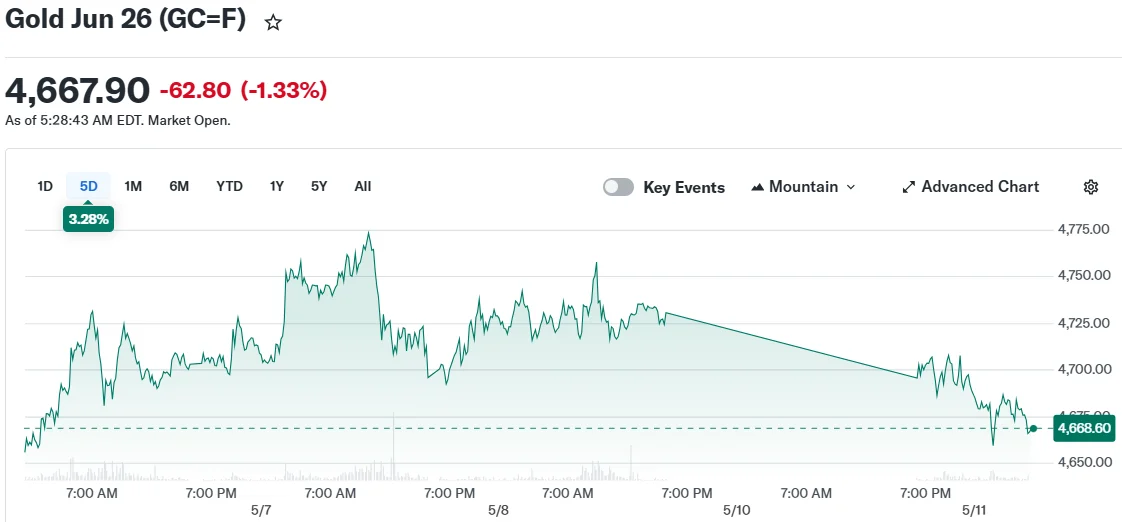
- Precious metals declined 1% to approximately $4,669 per ounce during Asian market hours on Monday
- President Trump dismissed Iran’s diplomatic response, labeling it “totally unacceptable”
- Crude oil prices jumped nearly 5% with the Strait of Hormuz remaining blocked
- An appreciating U.S. dollar combined with elevated interest rate projections weighed on gold
- Trump plans to convene with China’s Xi Jinping this week for discussions on Iran, commerce, and energy matters
Precious metals experienced a decline of roughly 1% during Asian market sessions on Monday, reversing gains exceeding 2% from the previous week. The pullback occurred following President Donald Trump’s dismissal of Iran’s latest diplomatic response to a U.S. peace initiative.
Trump characterized Tehran’s counteroffer as “totally unacceptable.” The Iranian government declined to dismantle nuclear infrastructure or halt uranium enrichment activities for a two-decade period, the Wall Street Journal reported.
Tehran proposed a phased reopening of the Strait of Hormuz along with ending hostilities. Iranian officials also agreed to dilute portions of highly enriched uranium while transferring remaining stockpiles to a third nation. Washington found these concessions insufficient.
Spot gold descended to $4,669.82 an ounce during early Monday trading. U.S. gold futures similarly retreated, settling at $4,678.31.
The Strait of Hormuz continues its closure. This waterway represents one of the planet’s most critical passages for oil transportation. The ongoing blockage propelled oil prices upward by nearly 5% in early trading.
The Oil-Gold Connection
Elevated oil prices amplify broader inflation anxieties. When inflation appears poised to remain elevated, monetary authorities typically maintain higher interest rates.
This scenario proves unfavorable for gold. The yellow metal generates no yield, making it less appealing when rates remain elevated and investors can secure better returns from alternative investments.
Soojin Kim from MUFG indicated that markets currently anticipate higher rates to address inflation risks linked to elevated energy costs. This dynamic creates immediate downward pressure on precious metals.
Robust U.S. employment figures from the previous week intensified this pressure. The payrolls report exceeded forecasts, reinforcing expectations that the Federal Reserve will maintain elevated rates for an extended period.
The U.S. Dollar Index advanced 0.2% during Asian trading hours. A strengthening dollar similarly burdens gold, as the metal becomes costlier for purchasers using alternative currencies.
Market Outlook
Investor focus has shifted toward forthcoming U.S. inflation statistics. Any unexpected movements in these figures could alter expectations surrounding Fed monetary policy.
Trump will travel to China later this week for meetings with President Xi Jinping. Iran, commercial relations, and worldwide energy security comprise the discussion agenda.
Silver advanced 0.2% to $80.51 per ounce. Platinum retreated 1.4% to $2,030.04 per ounce.
Copper displayed mixed performance. London benchmark copper futures climbed 0.3% to $13,608.33 a ton, while U.S. copper futures gained 0.4% to $6.32 a pound.
Gold had rallied on optimism surrounding a U.S.-Iran agreement during the previous week. That optimism has dissipated, with the inflation and rate environment now serving as the primary force driving the metal downward.
