


TLDR
- Bitcoin approached $70,000 but retreated to $68,300, unable to overcome a critical resistance level.
- Alternative cryptocurrencies showed stronger performance, with Cardano gaining 10.8%, Ether rising 8.5%, and Dogecoin climbing 8.3%.
- Nvidia surpassed Q4 earnings projections yet shares surrendered most advances during after-hours trading.
- Stablecoin supply plateau and macroeconomic headwinds continue challenging sustained cryptocurrency growth.
- Bitcoin dropping beneath $60,000 may activate cascading liquidations extending toward $47,000.
Bitcoin’s price peaked at $70,000 on Wednesday before declining to approximately $68,300 by Thursday morning. This represented roughly a 5% fluctuation from the session peak to the overnight bottom of $67,700.
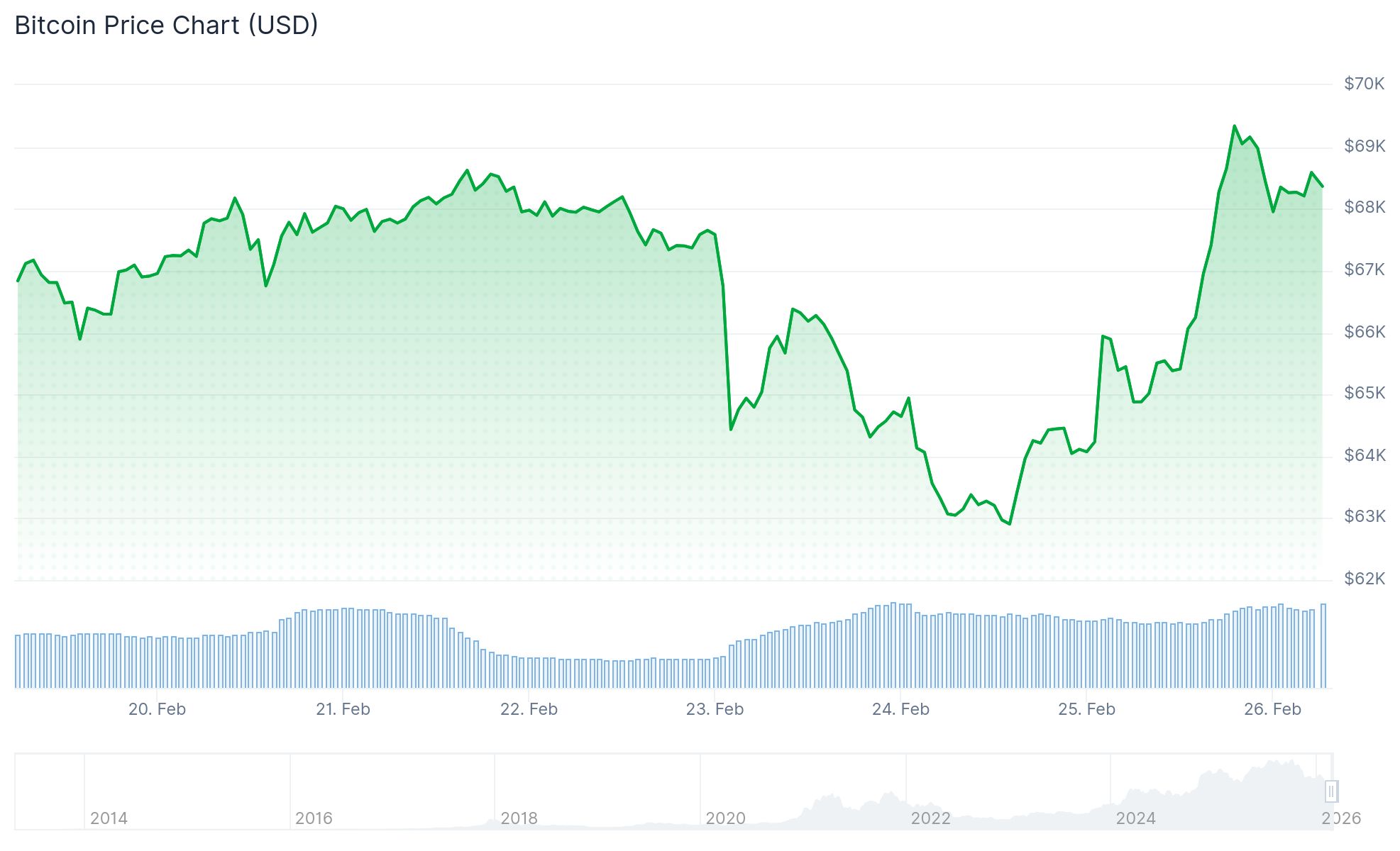
The rally marked the most significant effort to recapture $70,000 since the February 5 crash, yet the breakout remained incomplete.
Alternative cryptocurrencies demonstrated superior performance. Cardano topped the leading 10 tokens with a 10.8% advance, while Ether climbed 8.5%, Dogecoin rose 8.3%, and Solana increased 6.9%. Bitcoin’s 4.3% gain ranked among the weakest performances across major digital assets.
Such divergence typically signals renewed risk appetite. Market participants commonly shift capital into higher-volatility altcoins when confidence returns that selling pressure has peaked.
Daniel Reis-Faria, CEO of ZeroStack, said in an email: “The wave of forced selling is starting to clear out. Altcoins are outperforming again, and more of them are ahead of Bitcoin. That tells me we’re seeing a rotation.”
Nvidia Results Provide Brief Market Lift
Nvidia delivered Q4 financial results exceeding Wall Street projections for both earnings and revenue. The announcement temporarily eased concerns surrounding what analysts have described as the “AI scare trade” that has pressured markets throughout the year.
The positive momentum proved temporary. Nvidia shares surrendered the majority of their post-announcement advance during extended trading, finishing up merely 0.2%. Nasdaq 100 futures declined 0.3% following the disclosure.
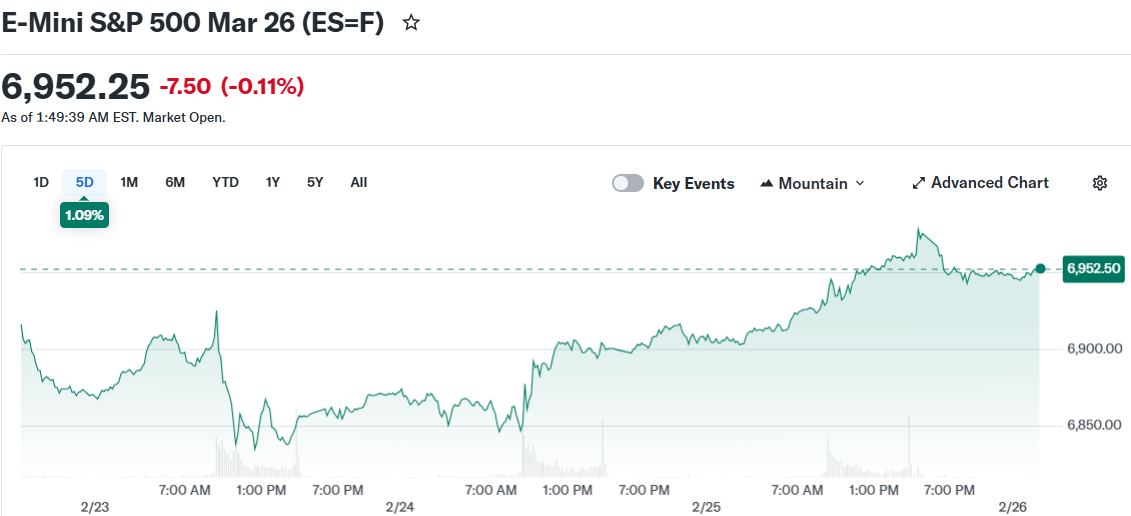
The S&P 500 achieved its second consecutive advance during Wednesday’s regular session. The Nasdaq Composite and Dow Jones Industrial Average similarly closed with positive results.
Salesforce declined approximately 5% during after-hours trading, extending a downturn that has produced roughly 28% losses year-to-date. Technology and software companies otherwise spearheaded the rebound during standard trading hours, with Oracle and every Magnificent Seven member recording gains.
President Trump, delivering remarks during his State of the Union address, indicated expectations for Big Tech companies to absorb increasing electricity costs from data centers.
Broader Economic Factors Challenge Digital Assets
Market maker Wintermute observed that cryptocurrencies have declined alongside technology equities as investors redirect capital toward defensive and physical assets.
Crypto finance platform Matrixport identified stagnant stablecoin supply as a barrier for Bitcoin advancement. Onchain analytics firm Glassnode projected broader liquidity restoration could require six months or longer.
Cryptoquant data indicates reduced selling activity on Binance, supporting prospects for near-term price recovery. However, crypto exchange Bitrue cautioned that Bitcoin falling beneath $60,000 might drive prices toward $50,000–$55,000, potentially reaching $47,000 should liquidations intensify.
Market participants will monitor Thursday’s weekly jobless claims and Friday’s January producer price index. Earnings reports are scheduled from Dell Technologies, Warner Bros. Discovery, and CoreWeave.
