


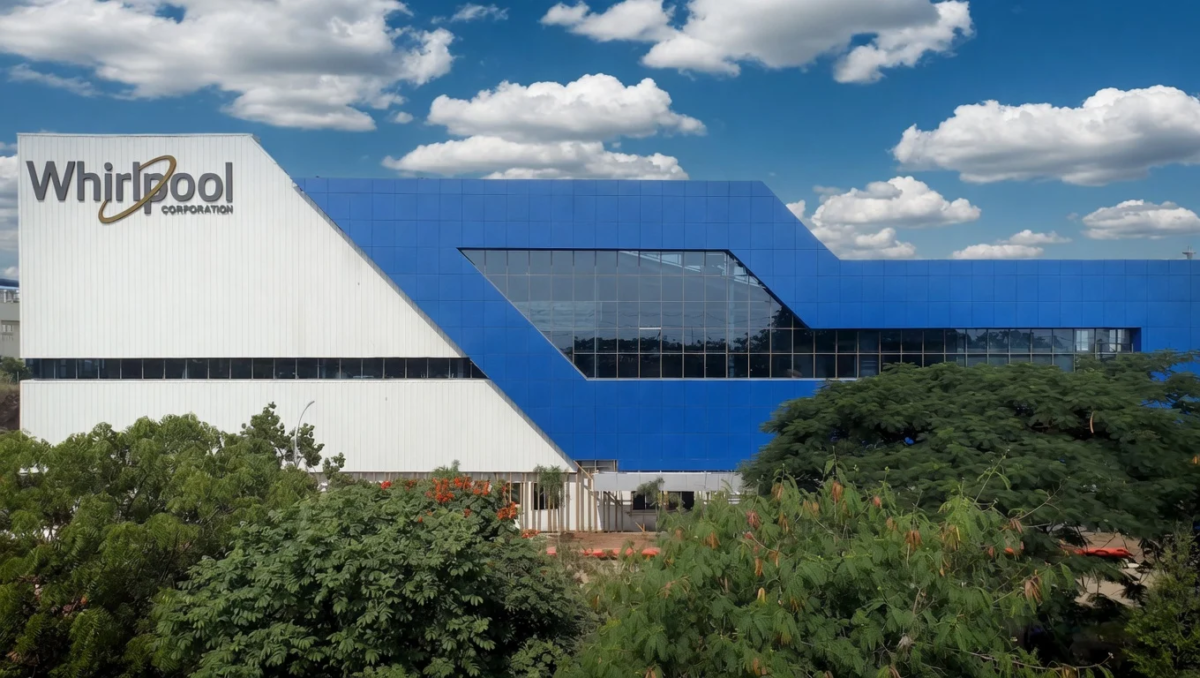
Key Highlights
- Whirlpool delivered a Q1 loss of 56 cents per share, compared to analyst expectations of a 38-cent profit
- The appliance manufacturer eliminated its quarterly dividend after maintaining payments for seven decades
- Annual EPS projections dropped dramatically from $7.00 to between $3.00 and $3.50
- WHR shares finished Thursday’s trading session at $48.21, declining 11.9%
- Management pointed to tariff uncertainties and severe industry demand weakness as primary challenges
Shares of Whirlpool finished Thursday’s session at $48.21, marking an 11.9% decline, following the company’s announcement of an unexpected quarterly loss and dividend elimination.
The home appliance manufacturer revealed a first-quarter loss of 56 cents per share on revenue of $3.3 billion. Analysts had projected earnings of 38 cents per share from $3.4 billion in revenue. During the same period last year, Whirlpool generated earnings of $1.70 per share on $3.6 billion in sales.
The company made substantial revisions to its annual earnings forecast. Management now anticipates earnings between $3.00 and $3.50 per share, representing a significant reduction from the previous $7.00 projection. Free cash flow expectations were also lowered from $450 million to $300 million.
The elimination of the dividend created the biggest stir among investors. Whirlpool had maintained its quarterly dividend of 90 cents through ten U.S. economic downturns and every major global crisis dating back to the 1950s. The company had already reduced the dividend by nearly half last year for the first time in generations. The payment has now been completely suspended, though management suggests the pause may be temporary.
CEO Marc Bitzer discussed the decision during the earnings call. “We would like to resume the dividend as quickly as possible, but clearly, it’s a board decision,” he said. “We need to have a better ongoing operating margin, and we want to continue to pay down our debt.”
The stock had been struggling before Thursday’s announcement. Prior to this session, WHR had declined 24% year-to-date and 28% over the trailing twelve months. Looking at a five-year period, shares have tumbled more than 80%.
Tariff Policy Changes Create Operational Challenges
Trade policy has created a complex operating environment. Whirlpool manufactures approximately 80% of its products within the United States, positioning it favorably when import tariffs are elevated. However, the Supreme Court’s February decision to overturn the Liberation Day tariffs removed a competitive advantage the company had enjoyed. Following that reversal, foreign competitors returned to the market with more aggressive pricing.
Simultaneously, separate Section 232 tariffs on steel and aluminum increased Whirlpool’s raw material expenses. This dual tariff impact — losing competitive protection while facing higher production costs — compressed profit margins significantly.
Section 232 tariffs were restructured in April to impose a uniform 25% levy on complete appliances, replacing the previous calculation based on steel content alone. Bitzer indicated that this new framework provides Whirlpool with stronger competitive positioning against importers. Investors, however, appear skeptical about the potential benefits.
Citi analyst Kyle Menges observed that “industry demand reached recession-level lows” in North America during the quarter, with a competitive pricing environment making things worse. He added that Whirlpool’s double-digit price increases “should be relatively defensible.”
Pricing Strategy and Manufacturing Expansion
Whirlpool has implemented price increases throughout its product portfolio of washers, dryers, refrigerators, and stoves this year, with additional increases scheduled for summer. Bitzer recognized that these increases will likely exceed those of competitors, but defended the strategy by highlighting new product launches.
Earlier in the year, the company secured $1.1 billion through a new equity offering. This move attracted criticism from investor David Tepper of Appaloosa Management, who characterized it as shareholder dilution and recommended Whirlpool consider partnerships or merger opportunities.
Last month, Whirlpool revealed plans for a $60 million investment in a new manufacturing facility in Perrysburg, Ohio, dedicated to producing washer and dryer components.
The company also identified declining U.S. consumer confidence — which it connects partly to oil price increases driven by the Iran conflict — as a factor suppressing appliance demand during the quarter. Organic net sales decreased 6% year-over-year in the first quarter.
